The Investigatory Powers Tribunal considered Declan's complaint and Human Rights Act claim, and concluded that it is obviously unsustainable. It has gotten to the point where sending and receiving emails is like playing in a casino
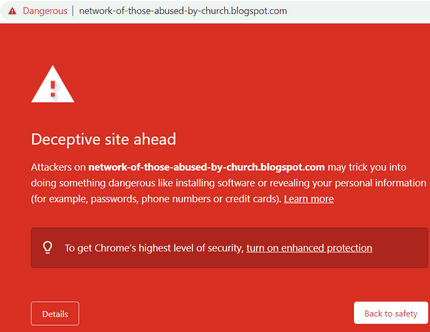
This Church and State blog was temporarily blocked by Google Blogger today not long after I posted this blog post. I was in the process of creating a new blog for this blog's restoration when the block was lifted.
DAY 363 IN A WEEKLY PERIODIC TENANCY
SUBJECT TO A 'NO FAULT' SECTION 21 NOTICE
MAYOR OF LONDON RSI PROPERTY
14/04/20
With the background as provided above, the Heaveys now are facing an eviction notice from their landlord, Peabody Trust housing association. The tenancy is a flat, which falls under the Mayor of London's Rough Sleepers Initiative. Pardoning my intrusion into English law, but in fairness there does not appear to be any reason for the eviction, relying apparently entirely on the discretion of the landlord.
Joseph R. Carvalko, Esq., American lawyer (full letter here)
Our Church and State website has no less than 63 Nobel Laureates on it despite the never-ending assault on our email; see paragraph 2 under "Church and State" on this blog's sidebar (updated today).

Mayor of London Sadiq Khan
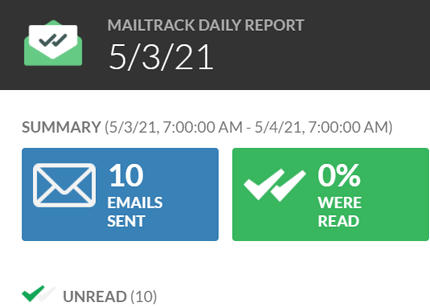
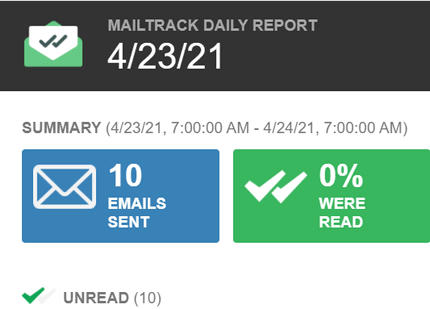
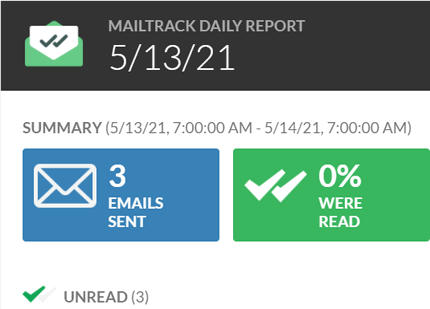
This is Day 363 for Declan and me living under the legal threat of a 'no fault' eviction by Peabody Trust. We live in a Mayor of London's Rough Sleepers Initiative property. Things have gotten so bad with our email that I'm only publishing one article a day on Church and State and spending the rest of the day researching brain-computer interfaces. This will remain the case until I have made at least one significant breakthrough in this field, with Declan using his mobile to phone America to try to get our emails through to people. Domestically things could not be more menacing for us than they are at the moment. In fact, we have only known pressure like this before we received a no-fault eviction notice from our previous landlord. There is more about the interception of our email, laptop and TV interference and Declan's ongoing problems with Newham Council in my blog post this morning, Threat to life: Will the Parliamentary and Health Service Ombudsman investigate Lyn Brown MP's second referral about the Information Commissioner's decision that allows St Mungo's to continue processing coercive support plans without our knowledge or consent and that poses a direct threat to Declan's life? The post reveals 17 knighted professors emailed at the beginning of last week, and only two read. The excessive targeting of this category of emails was maintained all week. We can only assume in the absence of an alert from Mailtrack that Declan's reply last Friday to the 13th knighted professor to be listed as one of our Honorary Associates was blocked. This is far from unusual and has applied to, among others, a number of the 20 Nobel Laureates on the list. Either that or the alerts were blocked (which is revealed when we receive a response to an email without us ever receiving the alert). Either way, the sabotage and manipulation of our email has remained a constant for years but has gotten to the point where sending and receiving emails is like playing in a casino. Nothing can be relied upon, not even my next day's reply to the co-founder with Elon Musk of Neuralink, which seems to have been blocked with my two new permission emails yesterday.
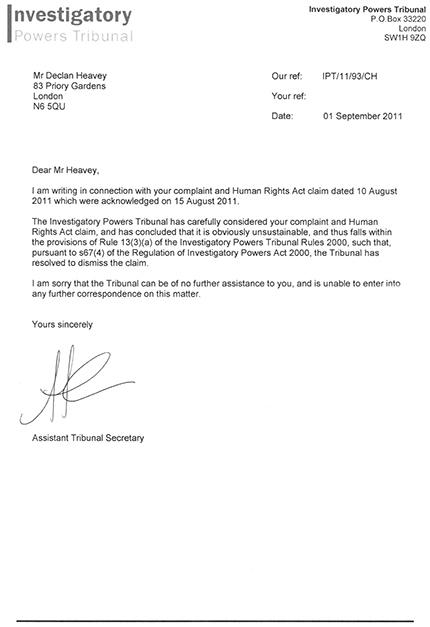
The Investigatory Powers Tribunal has carefully considered your complaint and Human Rights Act claim, and has concluded that it is obviously unsustainable, and thus falls within the provisions of Rule 13(3)(a) of the Investigatory Powers Tribunal Rules 2000, such that, pursuant to s67(4) of the Regulation of Investigatory Powers Act 2000, the Tribunal has resolved to dismiss the claim.
The Investigatory Powers Tribunal was created in October 2000 by the Regulation of Investigatory Powers Act and given the power to investigate any complaints against the Government Communications Headquarters (GCHQ), MI5 or MI6, as well as complaints about surveillance operations mounted by the police or any other public bodies. The Guardian reported in 2014 that the tribunal, which claims to be completely independent of the UK Government, is secretly operating from a base within the Home Office, by which it is funded. The newspaper found that the IPT had investigated about 1,500 complaints and upheld only 10, five of which concerned members of one family who had all lodged complaints about surveillance by their local council. No complaint against any of the intelligence agencies had ever been upheld. The discovery that the IPT is lodged within a Whitehall department has fuelled criticisms of the tribunal that has been levelled by rights groups, lawyers and complainants. The IPT's critics complain that the secrecy is excessive and that its procedures are stacked so heavily in favour of the government and against complainants that it is fundamentally unfair. According to The Guardian, some senior lawyers have described the IPT as "Kafkaesque", while one eminent barrister dismissed it as a "kangaroo court". The newspaper also reveals that because of the perception that the tribunal is unfair, many would-be complainants spurn it.
'Independent' court scrutinising MI5 is located inside Home Office http://t.co/ZezpDipCPx via @guardian
— Ian Cobain (@IanCobain) March 5, 2014
Our list of 301 Honorary Associates includes 20 Nobel Prize laureates, 18 US National Medal laureates and 13 knighted professors notwithstanding the excessive targeting of these categories of emails in particular.
http://churchandstate.org.uk/honorary-associates/
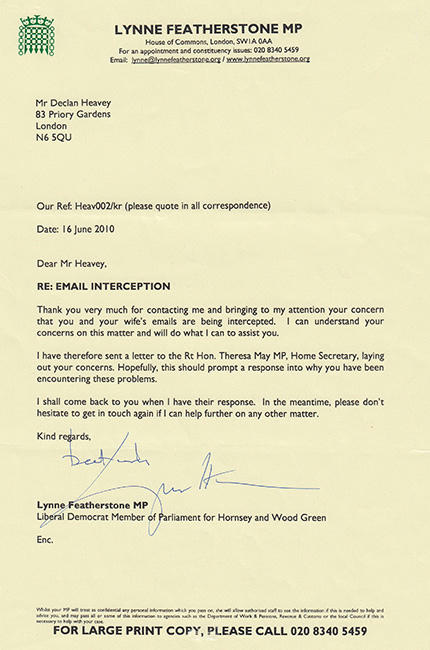
"I am truly appalled by the unlawful violation of the Heavey's basic right to send and receive email without interference. I would be most grateful for anything you may be able to do by way of taking measures to correct this gross abuse." An American professor to then Home Office Minister Lynne Featherstone in 2010